Measure Surgical Quality from What Actually Happened.
Quality measurement grounded in the procedure, not chart abstractions, not proxy measures.
Every surgical video becomes structured, objective quality data.
You Can't Improve What You Can't See.
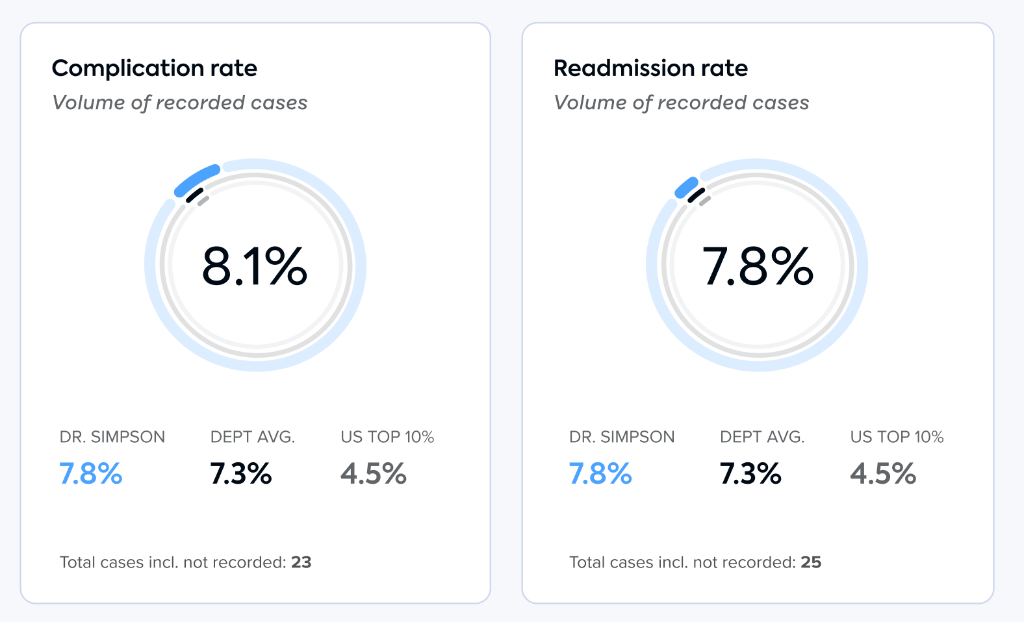
Quality today is reactive and measured through proxies: complication rates, readmissions, length of stay. Downstream signals that say something went wrong, not why. Inside the OR, where quality is determined, there's been no systematic measurement. That's why variability persists.
Quality Analytics
Surgeon, department, and system-level dashboards from intraoperative video.
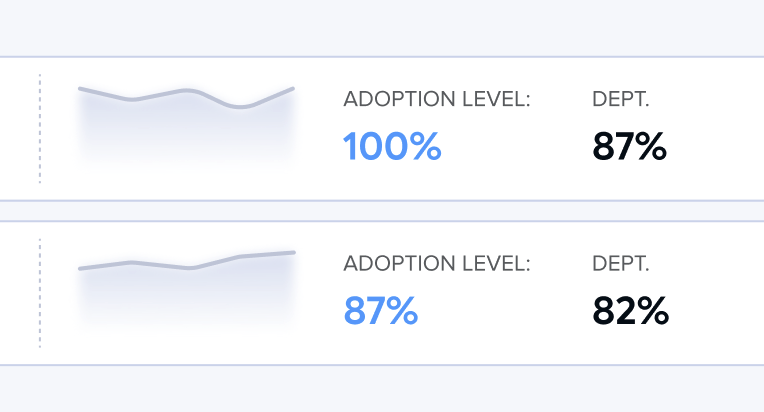
Variability Tracking
30–50% reduction across sites. Objective technique measurement.
Surgeons, Dept Chairs, Quality Officers
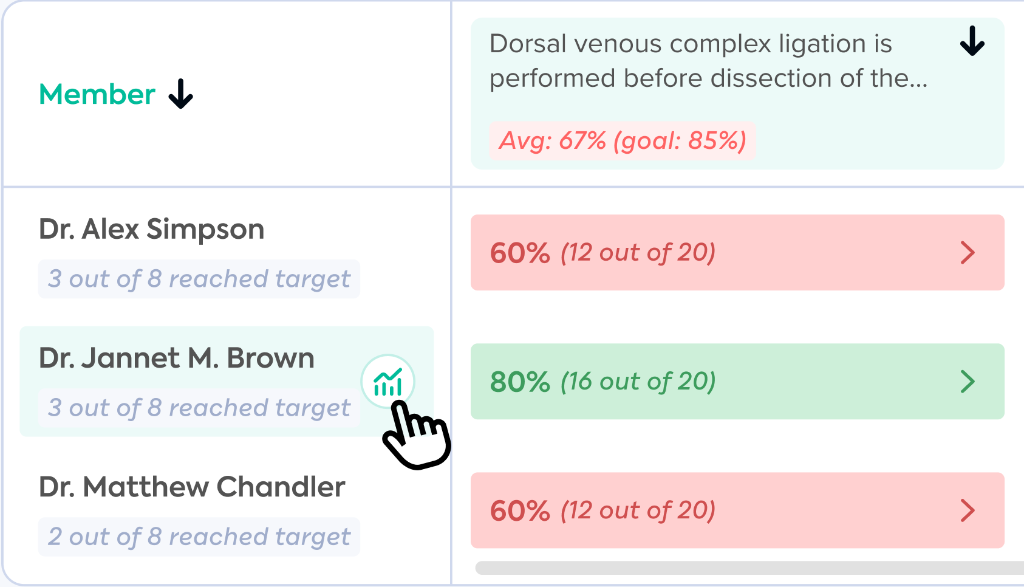
Benchmarking
Technique, timing, outcomes across surgeons and sites. Same AI, every case.
CMO, Quality Officers, Dept Leaders
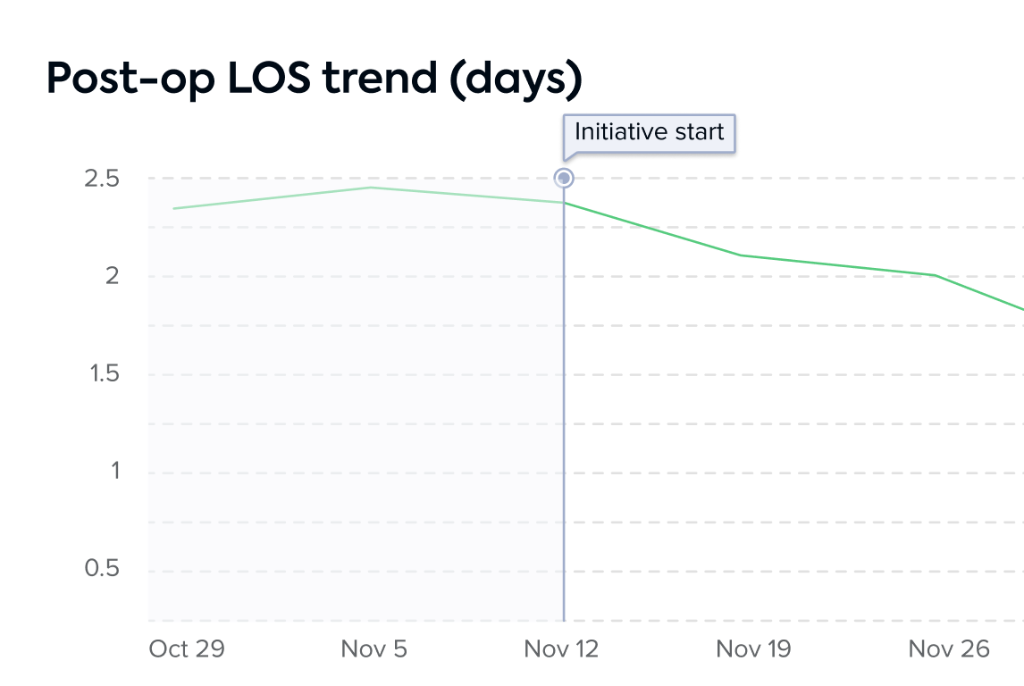
Outcome Correlation
Link intraoperative decisions to post-op outcomes via video ground truth.
Quality Officers, Research Teams
Safety Intelligence
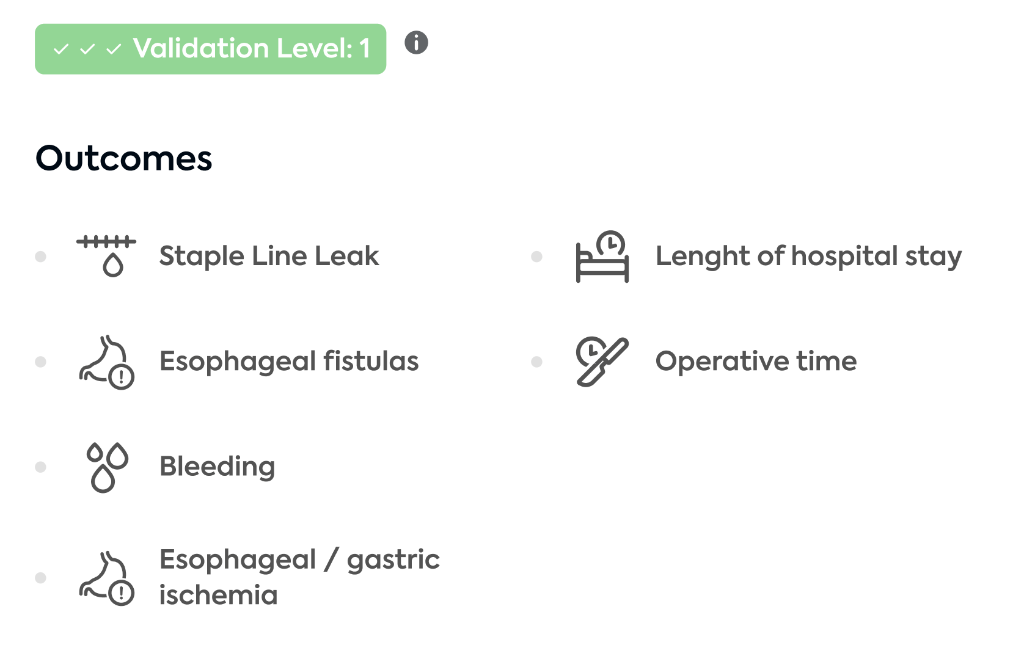
Safety milestone tracking. Near-miss detection. Complication patterns. Video-verified.
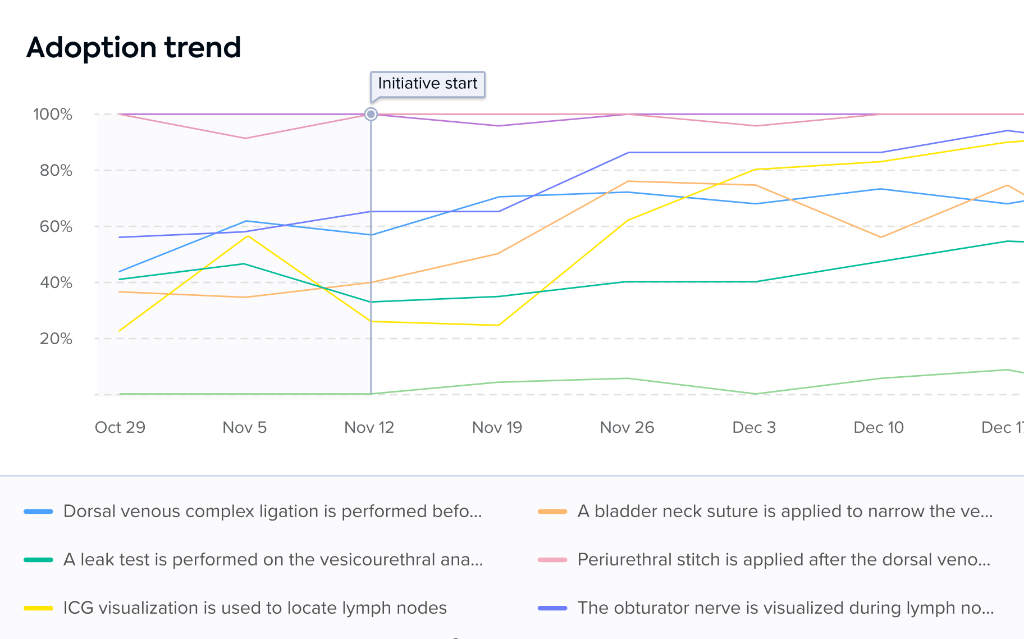
Safety Milestones
Automated critical safety step tracking. CVS: 33% → 76% in 6 months6.
Patient Safety, Surgeons
Adverse Events
Complication patterns, unexpected events, sentinel indicators.
Risk Management, CMO
Pattern Recognition
System-wide trends. Early warning before patterns become systemic.
Quality Officers, Dept Chairs
The Evidence

Annals of Surgery (Korndorffer et al., 2020)
Foundational positioning paper establishing the clinical case for AI in the operating room — safety, efficiency, and quality as primary drivers.
Annals of Surgery (Fried et al., 2024)
First real-world use of surgical intelligence for best-practice adoption. 279 cholecystectomies, 46 surgeons. CVS 33% → 76% (P < 0.001). CVS cases 13 min shorter, fewer adverse events6.

Journal of Minimally Invasive Gynecology (Levin et al., 2024)
Routine automated assessment using surgical intelligence reveals substantial time spent outside the patient's body in minimally invasive gynecological surgeries.

Artificial Intelligence Surgery (Messer et al., 2025)
Research at scale using structured surgical video data.
Measurement → Improvement
When surgeons see their own performance data grounded in video evidence and objective data, they change their behavior. Safety adoption tripled. Case times dropped. Adverse events decreased. Not just a dashboard. Visibility that drives improvement.
See What Your Quality Data Should Look Like.

6Fried GM, Ortenzi M, Dayan D, et al. Surgical intelligence can lead to higher adoption of best practices in minimally invasive surgery. Ann Surg. 2024;280(3):525-534.
7Messer N, Nizri E, Lahat G, Szold A. Implementing an AI-powered endoscopic surgery video recording system in a large hospital network: lessons learned and future prospects. Art Int Surg. 2025;5(2):182-190.
8Levin I, Bar O, Cohen A, et al. Routine automated assessment using surgical intelligence reveals substantial time spent outside the patient's body in minimally invasive gynecological surgeries. J Minim Invasive Gynecol. 2024;31(10):843-846.
14Korndorffer JR Jr, Hawn MT, Spain DA, et al. Situating artificial intelligence in surgery: a focus on disease severity. Ann Surg. 2020;272(3):523-528.