For Revenue Cycle Leaders
The Report Writes Itself. The Revenue Follows.
Surgical procedures generate ~60% of hospital margins. But inaccurate operative reports lead to undercoding, denials, and revenue leakage on every case. Theator captures what actually happened and translates it into documentation that protects every dollar.
The Root Cause Is in the Documentation
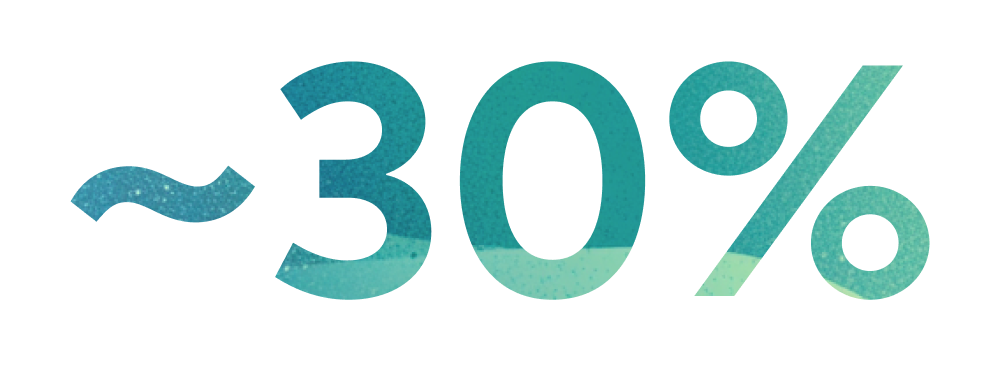
of surgical procedures contain undocumented or incorrectly coded elements
AHIMA; Khandekar et al., AUA 20254

average cost per claim denial rework
AAHAM industry benchmarks
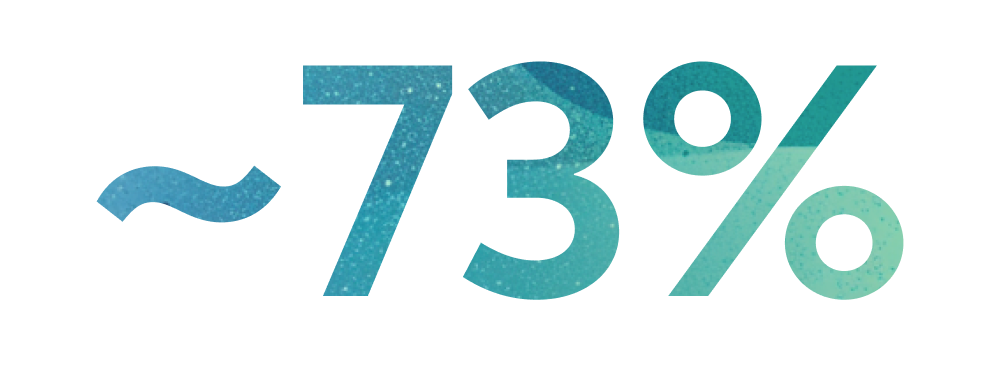
average accuracy of human written operative reports (the root cause)
Khanna et al., JACS 20251
The root cause is clear: operative reports are written from memory, at best, hours after surgery, using templates that miss procedure-specific detail. CDI teams query. Coders interpret. Denials pile up. Revenue leaks. 38% of hospital finance leaders report that over 10% of claims are denied due to inaccurate documentation. In a University of Miami study (AUA 2025)4, AI analysis of 2,909 surgical events across 180 procedures found 20.2% of events were missing from surgeon-written reports entirely — including notable hemorrhage, ligation of structures, and adhesiolysis.
In the first peer-reviewed head-to-head comparison, Mayo Clinic researchers found AI-generated operative reports achieved 87.3% accuracy vs. 72.8% for surgeon-written reports (p = 0.001, 158 cases, 8 surgeons). The study — published in the Journal of the American College of Surgeons1 and covered by Reuters and USA Today — also found procedures documented in surgeon reports that were never actually performed on video. The accuracy, currently >95%, comes from a model trained on 600,000+ real-world surgical procedures, and the reports flow directly into Epic and Oracle Health where your coding team already works.
How Surgery-to-Text® Fixes the Revenue Cycle
Surgery-to-Text® does not replace your coding team. It augments their performance by giving them a dramatically better source document.
Surgery-to-Text® generates operative reports directly from the surgical video. The AI has watched the entire procedure and understands exactly which steps were performed, which instruments were used, which anatomical landmarks were encountered, and what complexity was involved. The report captures the clinical specificity that coding teams need.
Reports include the procedural detail required for correct code assignment.
Mayo Clinic; Khanna et al. J Am Coll Surg 2025
Financial Impact - Tiered Summary by System Size
Community Hospital (10 ORs)
7,680 cases
Regional System (30 ORs)
23,040 cases
Large Academic Center (60 ORs)
46,080 cases
Integration with Revenue Cycle Workflow

Surgeon completes case

Video analyzed

Report generated

Delivered to EHR

Surgeon finalizes

CDI reviews

Coder assigns codes

Claim submitted
The AI processes surgical video in real-time, generating detailed, accurate reports.
The improvement happens at the source. Everything downstream gets easier. Reports land inside Epic and Oracle Health where your coders already work — no new portal, no context-switching, no workflow disruption.
Frequently Asked Questions
The report that drives your margins — and your patient care — should be accurate. Period.

1Khanna A, Wolf T, Frank I, et al. Enhancing accuracy of operative reports with automated artificial intelligence analysis of surgical video. J Am Coll Surg. 2025;240(5):739-746.
4Khandekar A, Shah H, Freitas P et al. Surgical intelligence and large language models: leveraging AI for complete and accurate operative reporting. American Urological Association (AUA) Annual Meeting 2025.